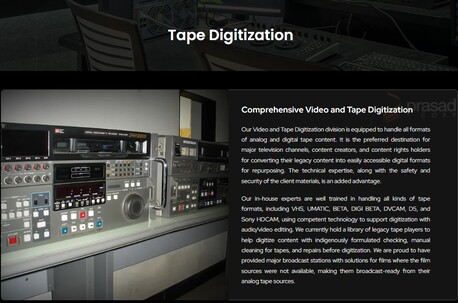
At the core of tape digitization are professional playback decks. These machines are designed to handle a wide range of tape formats such as VHS, Betacam, U-matic, MiniDV, and audio cassettes. Unlike consumer-grade players, professional decks offer stable playback, precise tape tension control, and advanced tracking systems that reduce distortion and dropouts during transfer.
Signal processing equipment plays a vital role in enhancing quality. Time Base Correctors (TBCs) are commonly used in tape digitization to stabilize video signals, correct synchronization errors, and eliminate jitter caused by tape wear. For audio tapes, high-end preamps and noise reduction systems help restore clarity while preserving the original sound characteristics.
Analog-to-digital converters (ADCs) are another critical component. These devices convert analog signals into high-resolution digital files. In professional tape digitization, broadcast-quality ADCs are preferred because they capture finer details, maintain color accuracy, and ensure proper audio sampling rates. The result is a digital file that closely matches the original recording.
Cleaning and tape preparation equipment are equally important. Over time, tapes accumulate dust, mold, and residue that can damage playback heads or cause signal loss. Specialized tape cleaning machines and gentle restoration tools are used before tape digitization begins. This step protects both the tape and the equipment while improving transfer quality.
Modern digitization workflows also rely on powerful computer systems and specialized software. These systems manage capture, monitoring, and initial quality checks during tape digitization. Advanced software allows technicians to detect issues in real time and make precise adjustments, ensuring consistency across large archives.
Finally, secure storage and backup systems are essential. Once tape digitization is complete, digital files are stored on reliable servers with multiple backup solutions to prevent data loss and ensure long-term accessibility.
Professional equipment, combined with technical expertise, makes all the difference in preserving valuable content. Trust Prasad Corp for world-class tape digitization solutions—connect today to safeguard your archives and bring your legacy media into the digital future.