Unlike regular accounting, real estate business accounting focuses on property-related income and costs, such as rent, maintenance, taxes, and property value. It gives a clear picture of how each property is performing.
What Is Real Estate Accounting?
In simple terms, what is real estate accounting means tracking and managing all financial activities related to properties. This includes recording rental income, expenses, investments, and lease details.
It also involves handling multiple properties, keeping records organized, and making sure all financial and tax rules are followed. With a proper system, businesses can avoid errors and manage finances more smoothly.
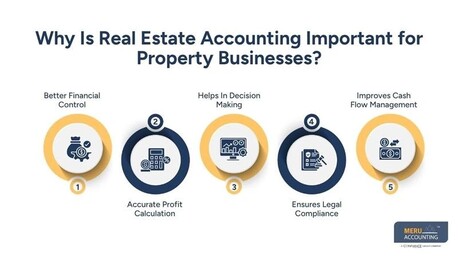
Why It Matters for Property Businesses
• Better control over finances: Helps track income and expenses clearly
• Accurate profit tracking: Shows real returns after all costs
• Improved decisions: Helps decide when to buy, sell, or hold property
• Legal compliance: Keeps records ready for taxes and audits
• Cash flow management: Ensures funds are available for expenses and repairs
How It Differs from Regular Accounting
Real estate accounting deals with large, less frequent transactions like property purchases and rental agreements. It tracks each property separately, focuses more on depreciation, and often involves complex ownership structures compared to standard business accounting.
Key Parts of Real Estate Accounting
• Chart of accounts: Organizes income and expenses like rent, repairs, and taxes
• Lease tracking: Monitors rent schedules and payments
• Expense tracking: Keeps record of all property-related costs
• Financial reports: Shows profit and performance
• Property-level tracking: Measures how each property performs
Common Methods Used
• Cash basis: Records transactions when money is received or paid
• Accrual basis: Records transactions when they happen
• Mixed method: Combines both for better flexibility
• Project-based tracking: Used for construction projects
• Cost separation: Helps reduce taxes by breaking down property costs
Common Challenges
Managing multiple properties, handling tax rules, tracking expenses, and maintaining steady cash flow can be difficult without a proper system.
Role of Bookkeeping and Tax Planning
Good bookkeeping keeps records updated and reduces errors. It also makes tax filing easier and helps track business performance. Tax planning helps lower tax payments through deductions, depreciation, and smart investment timing.
Benefits of Outsourcing
Many businesses outsource real estate accounting to save time, reduce costs, and improve accuracy. Experts can handle complex tasks, ensure compliance, and provide better financial insights.
Final Thoughts
Understanding what is real estate accounting helps property businesses stay organized, reduce errors, and make better decisions. With proper systems or expert support, managing property finances becomes easier, more accurate, and more efficient.
Contact Meru Accounting to manage your property finances accurately and ensure full compliance with all regulations. Let Meru Accounting streamline your property business accounting for clearer insights and smarter financial decisions.
FOR MORE INFO : https://www.meruaccounting. ...