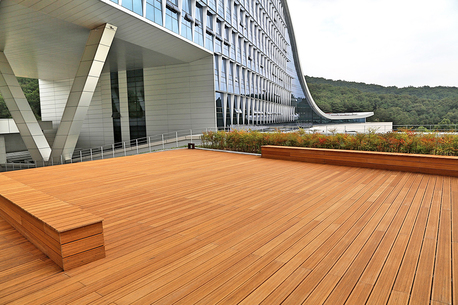
The visual and tactile quality of a room’s interior is largely defined by its vertical surfaces. While paint and wallpaper have long been the default choices for wall finishes, modern architecture has seen a significant shift toward materials that offer more depth, character, and longevity. Among these, bamboo veneer has emerged as a sophisticated alternative to traditional wood paneling. Specifically, Bothbest Moso veneer provides a combination of aesthetic warmth and technical practicality that is difficult to replicate with synthetic laminates or heavy solid timber.
When we talk about wall finishing, the challenge is often finding a balance between weight, ease of installation, and visual impact. Solid wood panels, while beautiful, are heavy, expensive, and prone to significant movement due to changes in humidity. Moso bamboo veneer, sourced and supplied by Bothbest in China, solves these issues by offering the genuine look and feel of natural bamboo in a thin, flexible, and stable format. This material is not merely a decorative skin; it is a high-performance architectural tool that allows for a seamless integration of nature into the built environment.
The Material Science of Moso Bamboo
To understand why Moso veneer is such a practical solution, one must look at the source material. Moso bamboo, or Phyllostachys edulis, is celebrated for its incredible density and fiber strength. Unlike many other bamboo species, Moso grows to a massive diameter and height, providing the substantial "walls" of the stalk necessary to produce wide, consistent strips for veneer production.
The process of creating veneer involves slicing these laminated bamboo blocks into thin sheets, usually around 0.6mm in thickness. Because bamboo is a grass, its fibers are remarkably straight and continuous. This linear cellular structure gives the veneer a high level of tensile strength. However, in its raw, sliced state, bamboo veneer can be somewhat brittle. To make it a practical solution for wall finishing, the material is bonded to a backing—typically a high-quality paper or a non-woven cellulose fleece. This backing is the "secret sauce" that allows the veneer to be handled, cut, and applied to walls without the risk of splitting or cracking.
Aesthetic Versatility in Wall Design
One of the primary reasons designers opt for Bothbest Moso veneer is the sheer variety of visual textures it offers. Wall finishing is rarely a "one size fits all" endeavor; different spaces require different moods.
Vertical Grain for Height and Order
In a vertical grain configuration, the bamboo strips are oriented on their sides before being sliced. This creates a narrow, consistent pinstripe pattern. When applied to walls, this verticality has a profound psychological effect on a space. It draws the eye upward, making rooms with standard ceiling heights feel more expansive and airy. It is a favorite for modern office corridors and minimalist residential feature walls where the goal is a clean, disciplined aesthetic.
Horizontal Grain for Organic Texture
Horizontal grain veneer showcases the natural nodes or "knuckles" of the bamboo stalk. These periodic marks create a rhythmic, horizontal texture that feels more rustic and connected to the plant’s botanical origins. For hospitality environments, such as hotel lobbies or spa treatment rooms, horizontal Moso veneer provides a sense of grounding and tranquility. It breaks up the monotony of large wall surfaces by introducing a natural, repeating pattern that invites the touch.
Color Depth without Stains
The color options for Moso veneer—Natural and Carbonized—are not achieved through surface dyes. The Natural tone is a light, creamy blonde that reflects light efficiently, making it ideal for spaces that lack abundant windows. The Carbonized tone is achieved through a pressurized steaming process that caramelizes the natural sugars within the bamboo fibers. This results in a rich, warm nut-brown that permeates the entire thickness of the veneer. Because the color is intrinsic to the material, it won't fade or wear off, ensuring the wall finish looks as vibrant in ten years as it does on the day of installation.
Practical Installation and Substrate Integration
The practicality of Moso veneer is perhaps most evident during the installation phase. Traditional solid wood paneling requires a heavy sub-structure of furring strips and mechanical fasteners. In contrast, Moso veneer can be applied to a wide variety of lightweight substrates.
In most professional applications, the veneer is pressed onto sheets of MDF (Medium Density Fiberboard), plywood, or even particleboard. These panels are then mounted to the wall. This method provides several advantages:
Dimensional Stability: Because the veneer is so thin and the substrate is engineered, the panels do not warp or shrink like solid wood. This allows for tight, precise butt-joints or the use of minimalist "shadow gap" detailing between panels.
Weight Reduction: Using veneered panels significantly reduces the load on the building’s structure compared to solid timber, which is a critical consideration in high-rise commercial projects.
Seamless Integration: Veneer allows for the creation of "hidden" doors or integrated cabinetry that blends perfectly with the surrounding wall. When the grain of the veneer is sequence-matched across a door and the wall, the door virtually disappears when closed, creating a sleek, uninterrupted surface.
For more creative applications, fleece-backed Moso veneer can be applied directly to curved surfaces. Whether it is a radiused corner in a hallway or a circular feature column, the flexibility provided by the fleece backing allows the bamboo to wrap around forms that would be impossible to achieve with traditional wood boards.
Acoustic and Thermal Performance
While often selected for its looks, Moso veneer contributes to the physical comfort of a room as well. Natural materials like bamboo have a much lower thermal conductivity than gypsum board or stone. A wall finished with bamboo veneer feels warmer to the touch and helps maintain a more consistent internal temperature.
Acoustically, bamboo is an excellent material for sound management. While a smooth veneered panel will reflect some sound, it does not have the harsh "ping" of glass or polished stone. In more technical environments, such as theaters or conference rooms, Moso veneer can be perforated or slotted. When these veneered acoustic panels are backed with sound-absorbent insulation, they provide a world-class solution for noise reduction while maintaining a high-end, luxurious appearance. This makes Bothbest Moso veneer a practical choice for environments where both aesthetics and sound quality are non-negotiable.
Environmental Stewardship and Indoor Air Quality
As building codes and client expectations move toward higher environmental standards, the choice of wall finish is under more scrutiny than ever. Moso bamboo is a champion of sustainability. It is a rapidly renewable resource that reaches maturity for harvest in just five years, compared to the 50 o