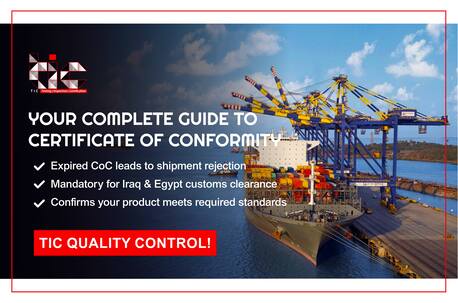
Exporting to Egypt requires navigating one of the Middle East's most comprehensive import compliance frameworks. At the center of this framework sits the Egypt Certificate of Conformity (Egypt CoC), a mandatory document that governs market entry for hundreds of product categories. Understanding the Egypt CoC verification process, GOEIC requirements, and what it takes to obtain an Egyptian CoC is essential for exporters serious about accessing the Egyptian market.
What is Egypt CoC? Understanding the Egyptian Certificate of Conformity
The Egypt Certificate of Conformity, commonly abbreviated as Egypt CoC, is an official document certifying that products meet Egyptian technical standards and regulatory requirements before entering the country. The Egypt CoC verification process involves independent pre-shipment inspection, testing, and assessment by an authorized body before goods leave the country of origin.
Think of Egypt CoC verification as a mandatory quality gate. Without a valid Egypt CoC certificate, goods cannot clear Egyptian customs. The Egyptian CoC verification process ensures that only compliant, safe products reach Egyptian consumers and markets.
GOEIC: The Regulatory Authority Behind Egypt CoC
GOEIC (General Organization for Export and Import Control) is an Egyptian government body operating under the Ministry of Trade and Industry. GOEIC sets policy for Egypt CoC requirements and oversees the Egypt CoC verification framework. When you obtain an Egypt CoC certificate from GOEIC-appointed bodies like TICQC, you're working within an officially recognized and government-sanctioned program.
Which Products Require an Egypt CoC Certificate?
The Egypt CoC requirement applies to a broad and expanding list of product categories.
Cosmetics and Personal Care: All cosmetics, skincare, haircare, makeup, deodorants, and nail care products require Egypt CoC verification.
Electrical and Household Appliances: Washing machines, refrigerators, microwave ovens, air conditioners, and similar household electrical devices require an Egypt CoC.
Textiles and Clothing: All imported garments, home textiles, and fabrics require an Egypt CoC certificate.
Toys and Children's Products: Toys require Egypt CoC certification verifying mechanical safety and chemical composition.
The Egypt CoC Verification Process: Step by Step
Understanding the Egypt coc verification process helps you plan timelines and avoid costly delays.
Step 1: Request for Certification (RFC) - Submit formal documentation with product details and applicable standards.
Step 2: Documentary Review - GOEIC-appointed bodies review your documentation, invoices, and product specifications.
Step 3: Laboratory Testing - Samples are tested against applicable Egyptian standards if required.
Step 4: Pre-Shipment Inspection - An authorized inspector conducts physical inspection at your facility.
Step 5: Certificate of Conformity Issuance - Your official Egypt CoC certificate is issued and transmitted to GOEIC's system.
Frequently Asked Questions About Egypt CoC
Is Egypt CoC mandatory for all goods? No. Only GOEIC-regulated product categories require Egypt coc verification.
Can Egypt CoC be obtained after shipment? The Egypt CoC program is pre-shipment by design. Always obtain Egypt coc verification before goods leave the country of origin.
How long is Egypt CoC valid? A CoC is typically shipment-specific and valid for customs clearance of that specific shipment.
Start Your Egypt CoC Journey Today
Exporting to Egypt successfully requires understanding and complying with Egypt CoC requirements. Working with GOEIC-appointed bodies like TIC Quality Control ensures your Egypt coc verification meets all regulatory standards.
Ready to obtain your Egypt CoC certificate? Contact a GOEIC-appointed verification body today. Visit https://ticqc.ae/egypt-coc/ for more information.