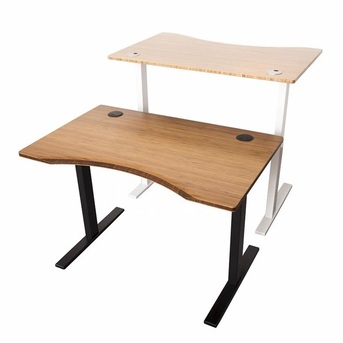
The modern workspace has undergone a significant visual shift. For years, offices were dominated by heavy, dark wood furniture or clinical gray cubicles that prioritized utility over personal well-being. As remote work and intentional living have reshaped our homes and corporate offices, a cleaner philosophy has taken hold. Minimalism in the workspace is not merely about having an empty desk; it is about selecting intentional, high-quality pieces that promote mental clarity, physical comfort, and calm focus.
Achieving this balance requires pairing a reliable mechanical foundation with a warm, natural surface. An adjustable motorized frame provides the necessary health benefits of movement, while a premium bamboo table top introduces an organic texture that softens the industrial look of metal lifting columns. When styled with a minimalist approach, this combination creates an inviting, highly functional environment that helps you focus without visual distraction.
The Core Philosophy of a Minimalist Workspace
A minimalist workspace focuses on eliminating unnecessary clutter to reduce cognitive fatigue. Every item permitted onto the surface should serve a specific purpose or bring genuine aesthetic value. When you remove excess paper pileups, tangled cords, and redundant desktop organizers, you free up mental bandwidth to handle high-level creative and analytical tasks.
However, a minimalist setup can risk feeling cold, sterile, or uninspiring if it relies entirely on synthetic plastics, glass, or monochromatic laminates. This is where organic textures become essential. A natural grass-based surface brings a sense of life and warmth to an otherwise geometric, mechanical setup. The linear grain patterns, subtle growth knots, and soft satin finishes catch natural light beautifully, ensuring that a simple, un-cluttered workspace still feels premium and full of character.
Selecting the Right Foundation for Structural Balance
When building a sit-stand workstation around a high-performance frame, visual balance is just as important as mechanical compatibility. Motorized frames are inherently structural and modern, featuring clean lines and square or rounded steel telescoping legs. To complement this engineering, the chosen surface needs to mirror that clean aesthetic while providing a soft contrast.
The color tone you choose sets the mood for your entire room. A natural, light blonde hue works exceptionally well in spaces inspired by Scandinavian or Japandi design principles, maximizing ambient light and making small rooms feel larger. For spaces requiring a moodier, more executive feel, a caramelized or dark amber shade adds sophisticated warmth without compromising the organic visibility of the grain.
Thickness also dictates the visual weight of your desk. A three-quarter-inch or one-inch profile provides a clean, substantial edge that looks proportional to heavy-duty steel frames, ensuring the entire unit feels cohesive from the floor to the monitor mount.
Masterful Cable Management: The Hidden Art
Nothing ruins the clean lines of a minimalist desk faster than a chaotic waterfall of black power cords, monitor cables, and charger wires dangling beneath the surface. Because an adjustable desk must travel up and down regularly, cable management requires a smart, dynamic strategy to keep wires safe and entirely out of sight.
The process begins underneath the workspace. High-end panels are engineered to handle the installation of heavy-duty under-desk management trays, power strips, and custom routing clips. By mounting a central power strip directly to the underside of the panel, you can plug all your monitors and computer towers into a single location. From there, only one main, heavy-duty extension cord needs to run down the desk leg to the wall outlet.
Using braided cable sleeves that match the color of your frame allows you to bundle that single remaining cord tightly against the lifting column. When the desk rises to standing height, the sleeve flexes naturally without snagging, preserving a clean, cordless appearance from every angle in the room.
Desktop Editing: Curating Your Daily Tools
Once the background cables are hidden, the styling of the upper surface should follow a strict editing process. Instead of scattering loose pens, sticky notes, and paperclips across the desk, invest in a single, high-quality desk mat made from natural wool felt or premium leather. A desk mat defines your primary working zone, protects the finish from micro-scratches, and dampens the acoustic clatter of typing.