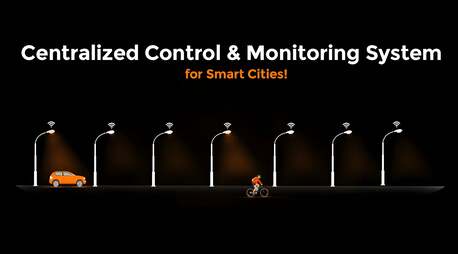
Smart street lighting combines high-efficiency LED luminaires, integrated motion sensors for real-time traffic-responsive brightness control, and CCMS IoT monitoring — delivering up to 70% energy savings vs conventional fixed-brightness systems, real-time fault detection, remote control, and device-level energy analytics. Traditional street lighting (HPS/MH/fluorescent) runs at fixed brightness regardless of traffic, fails silently with no automated detection, and provides no device-level data or remote control capability. TRUEiSENSE, India's No.1 True Presence Technology brand, provides CCMS Smart Lighting Solutions with LoRaWAN/WiFi/GSM connectivity for municipalities, campuses, and commercial estates across India — a complete smart energy saving solution for outdoor lighting infrastructure.
Smart vs Traditional Street Lighting — Full 11-Dimension Comparison
1. Light Source
(i) Traditional Street Lighting: HPS/MH/Fluorescent (lower efficacy).
(ii) TRUEiSENSE Smart Street Lighting: High-efficiency LED with significantly higher efficacy.
2. Energy Consumption
(i) Traditional Street Lighting: Fixed wattage, operates at full power throughout the night.
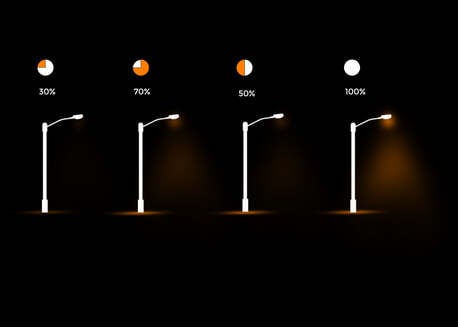
(ii) TRUEiSENSE Smart Street Lighting: Dynamic dimming with up to 70% energy reduction compared to conventional systems.
3. Traffic Response
(i) Traditional Street Lighting: No traffic responsiveness; fixed brightness regardless of activity.
(ii) TRUEiSENSE Smart Street Lighting: Motion sensors adjust brightness according to real-time traffic conditions.
4. Fault Detection
(i) Traditional Street Lighting: Reactive, based on inspections or public complaints.
(ii) TRUEiSENSE Smart Street Lighting: Real-time CCMS alerts with automated SMS notifications.
5. Remote Control
(i) Traditional Street Lighting: Not available.
(ii) TRUEiSENSE Smart Street Lighting: Full remote dimming and scheduling through the CCMS web dashboard.
6. Energy Monitoring
(i) Traditional Street Lighting: Aggregate billing estimates only.
(ii) TRUEiSENSE Smart Street Lighting: Device-level real-time energy consumption analytics.
7. Maintenance
(i) Traditional Street Lighting: Reactive dispatch with limited fault information.
(ii) TRUEiSENSE Smart Street Lighting: Proactive dispatch with precise fault location and fault type via SMS.
8. Smart City Integration
(i) Traditional Street Lighting: Not IoT compatible.
(ii) TRUEiSENSE Smart Street Lighting: IoT-ready through LoRaWAN, WiFi, and GSM open protocols.
9. Service Life
(i) Traditional Street Lighting: HPS typically 8,000–12,000 hours with frequent relamping.
(ii) TRUEiSENSE Smart Street Lighting: LED lifespan exceeding 50,000 hours with significantly reduced maintenance.
10. Light Quality
(i) Traditional Street Lighting: Poor colour rendering (HPS typically CRI 20–25).
(ii) TRUEiSENSE Smart Street Lighting: High-CRI LED lighting for improved visibility and colour accuracy.
11. Total Cost of Ownership
(i) Traditional Street Lighting: Higher due to energy consumption and maintenance requirements.
(ii) TRUEiSENSE Smart Street Lighting: Lower through energy savings and extended service life.
CCMS Smart Lighting: trueisense.in/pages/ccms-monitoring-sensor-street-lighting-solutions Free Assessment: trueisense.in/pages/free-energy-savings-assessment
As of 2026, the comparison between smart and traditional street lighting is unambiguous across every performance dimension. For Indian municipalities, campuses, and commercial estates, the transition to smart street lighting is not merely an aspiration but a financially compelling and technically proven investment — delivering up to 70% energy savings, dramatically improved operational management, and smart city IoT infrastructure through TRUEiSENSE's CCMS Smart Lighting Solutions.
What Is Smart Street Lighting and How Does TRUEiSENSE's System Work?
Smart street lighting combines three elements: high-efficiency LED luminaires, integrated motion sensors for traffic-responsive brightness control, and CCMS IoT monitoring for centralized management. Each TRUEiSENSE smart street light contains an LED light source, an integrated motion sensor, and an IoT communication node.
During low-traffic periods, the LED operates at a configurable standby dimming level — maintaining base safety illumination while consuming significantly less energy. When the motion sensor detects a vehicle or pedestrian, the LED increases to full operational brightness smoothly and rapidly. The IoT node simultaneously transmits real-time operational data to the CCMS server via LoRaWAN, WiFi, or GSM — triggering automated SMS alerts if faults are detected.
Bottom Line:
TRUEiSENSE's smart street lights combine LED efficacy, real-time traffic-responsive motion sensor dimming, and IoT CCMS monitoring — delivering up to 70% energy savings, proactive fault management, and centralized remote control from a single web dashboard.
What Are the Key Benefits of Smart Street Lighting Over Traditional Systems?
1. Up to 70% Energy Savings
(i) Impact: Significant reduction in municipal and campus electricity expenditure.
(ii) TRUEiSENSE Capability: High-efficiency LED lighting combined with real-time traffic-responsive sensor dimming.
2. Proactive Fault Management
(i) Impact: Eliminates silent failures and improves public safety.
(ii) TRUEiSENSE Capability: Real-time CCMS dashboard alerts and automated SMS notifications.
3. Centralized Remote Control
(i) Impact: Eliminates site visits for dimming and scheduling changes.
(ii) TRUEiSENSE Capability: Full remote control through the CCMS web dashboard from any device.
4. Device-Level Energy Analytics
(i) Impact: Enables evidence-based maintenance and optimization decisions.
(ii) TRUEiSENSE Capability: Real-time energy consumption monitoring at individual node level.
5. Smart City IoT Integration
(i) Impact: Supports broader urban data infrastructure initiatives.
(ii) TRUEiSENSE Capability: Open protocols including LoRaWAN, WiFi, and GSM for integration with city platforms.
Bottom Line:
Smart street lighting delivers five transformational advantages over traditional systems: 70% energy savings, proactive fault management, remote control, device-level analytics, and smart city IoT integration — all achieved through TRUEiSENSE's CCMS Smart Lighting Solutions.
LoRaWAN, WiFi & GSM — IoT Communication for Smart Street Lighting
The choice of IoT communication protocol has significant implications for the cost and feasibility of CCMS deployment. TRUEiSENSE's CCMS supports three protocols to cover all Indian deployment scenarios:
1. LoRaWAN
(i) Coverage & Use Case: Long-range communication with several kilometers of coverage per gateway and low power consumption.
(ii) Best For: Municipal networks, rural roads, and city-wide deployments.
2. WiFi
(i) Coverage & Use Case: Higher bandwidth using existing network infrastructure.
(ii) Best For: Industrial campuses, educational institutions, and commercial estates.
3. GSM (Cellular)
(i) Coverage & Use Case: Nationwide co