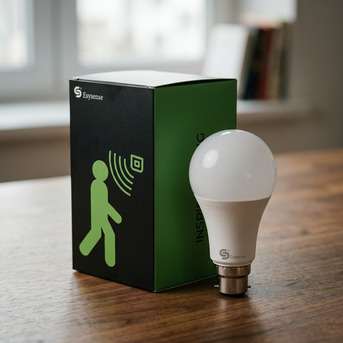
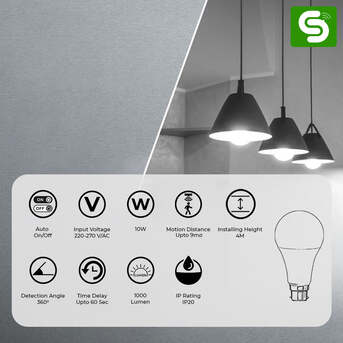
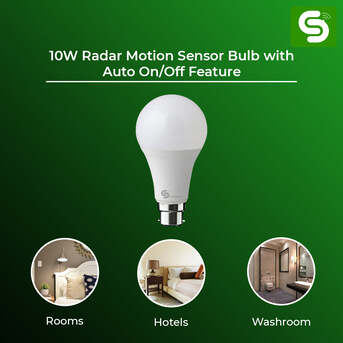
A motion sensor bulb for kitchen use automatically switches ON when movement is detected and switches OFF when the area becomes vacant. This smart lighting solution is ideal for kitchens, pantries, utility rooms and food preparation areas where hands are often occupied.
By eliminating the need to manually operate switches, motion sensor bulbs improve convenience, reduce electricity wastage and create a smarter kitchen environment.
Product Comparison:
(i) Operation
Motion Sensor Bulb: Auto ON/OFF
Motion Sensor Dimmable Bulb: Auto Bright & Dim
(ii) Detection Technology
Motion Sensor Bulb: Radar Motion Sensor
Motion Sensor Dimmable Bulb: Radar Motion Sensor
(iii) Energy Saving
Motion Sensor Bulb: Excellent
Motion Sensor Dimmable Bulb: Excellent
(iv) Installation
Motion Sensor Bulb: Standard Bulb Holder
Motion Sensor Dimmable Bulb: Standard Bulb Holder
(v) User Comfort
Motion Sensor Bulb: High
Motion Sensor Dimmable Bulb: Very High
(vi) Best For
Motion Sensor Bulb: Kitchens & Utility Rooms
Motion Sensor Dimmable Bulb: Premium Kitchens
Why Kitchens Benefit from Motion Sensor Lighting?
The kitchen is one of the busiest areas in a home. People frequently enter and exit while carrying groceries, utensils, dishes or food items.
Common kitchen lighting problems include:
(i) Hands occupied while entering
(ii) Forgetting to switch lights OFF
(iii) Frequent switching throughout the day
(iv) Increased electricity consumption
(v) Poor visibility during night-time use
A motion sensor bulb automatically solves these challenges.
Bottom Line:
Kitchens experience frequent but short-duration occupancy, making them ideal for motion sensor lighting.
How a Motion Sensor Bulb Works in a Kitchen?
Modern radar motion sensor bulbs continuously monitor movement within their detection range.
When Someone Enters:
(i) Motion is detected.
(ii) The bulb automatically switches ON.
(iii) Full illumination is provided.
(iv) The light remains active while movement continues.
When the Kitchen Becomes Vacant:
(i) Motion detection stops.
(ii) Delay timer begins.
(iii) The bulb switches OFF or enters dim mode.
(iv) Power consumption is reduced.
The entire process is automatic and requires no manual intervention.
Advantages of Motion Sensor Bulbs in Kitchens
(i) Hands-Free Convenience: Users can enter the kitchen carrying groceries, dishes or cooking ingredients without searching for switches.
(ii) Better Energy Efficiency: Lights operate only when the kitchen is occupied.
(iii) Improved Night-Time Visibility: Automatic activation provides immediate illumination during late-night kitchen visits.
(iv) Modern Smart Home Experience: Motion sensor bulbs add intelligent automation without requiring complex installations.
(v) Reduced Electricity Bills: Automatic shut-off prevents lights from remaining ON unnecessarily.
Bottom Line:
Motion sensor bulbs deliver convenience, efficiency and automation in a single lighting solution.
Best Kitchen Applications:
(i) Main Kitchen Area: Provides automatic illumination whenever family members enter.
(ii) Pantry Rooms: Pantries are often visited briefly, making sensor lighting highly efficient.
(iii) Utility Areas: Automatic lighting improves convenience when handling household tasks.
(iv) Storage Rooms: Lights activate instantly whenever access is required.
(v) Service Kitchens: Ideal for commercial kitchens where frequent movement occurs.
Motion Sensor Bulb vs Traditional Kitchen Bulb
(i) Manual Switching
Traditional Bulb: Required
Motion Sensor Bulb: Automatic
(ii) Electricity Saving
Traditional Bulb: Moderate
Motion Sensor Bulb: High
(iii) User Convenience
Traditional Bulb: Standard
Motion Sensor Bulb: Excellent
(v) Smart Functionality
Traditional Bulb: None
Motion Sensor Bulb: Available
(vi) Night-Time Use
Traditional Bulb: Basic
Motion Sensor Bulb: Superior
Bottom Line:
A motion sensor bulb significantly improves convenience while reducing energy waste compared to traditional lighting.
Motion Sensor Bulb vs Motion Sensor Dimmable Bulb
Standard Motion Sensor Bulb:
Features:
(i) Full brightness when motion detected
(ii) Complete shut-off after vacancy
(iii) Maximum energy savings
(iv) Simple operation
Motion Sensor Dimmable Bulb:
Features:
(i) Full brightness during occupancy
(ii) Low standby brightness when vacant
(iii) Enhanced visibility
(iv) Premium lighting experience
Bottom Line:
For most households, standard motion sensor bulbs provide excellent performance, while dimmable versions offer additional comfort and visibility.
Energy Saving Potential
Kitchen lights are often switched ON multiple times throughout the day.
Without automation:
(i) Lights may remain ON unnecessarily
(ii) Occupancy is not always monitored
(iii) Electricity consumption increases
With motion sensor technology:
(i) Lights operate only when needed
(ii) Automatic shut-off reduces wastage
(iii) Overall lighting efficiency improves
This makes motion sensor bulbs one of the simplest energy-saving upgrades for modern kitchens.
Why Motion Sensor Kitchen Lighting Is Growing in Popularity?
Several trends are driving adoption:
(i) Smart home automation
(ii) Rising electricity costs
(iii) Demand for convenience
(iv) Modern kitchen renovations
(v) Increased focus on energy efficiency
Homeowners increasingly prefer automated lighting solutions that simplify everyday activities.
Frequently Asked Questions
Q: Is a motion sensor bulb suitable for kitchens?
A: Yes. Kitchens are among the best applications because occupancy is frequent and hands-free operation improves convenience.
Q: Can a motion sensor bulb replace a regular kitchen bulb?
A: Yes. Most motion sensor bulbs are designed to fit standard bulb holders and can directly replace conventional bulbs.
Q: What is a radar motion sensor bulb?
A: A radar motion sensor bulb uses motion detection technology to automatically control lighting based on occupancy.
Q: Do motion sensor bulbs save electricity?
A: Yes. They ensure lights operate only when the kitchen is occupied, reducing unnecessary energy consumption.
People Also Ask
Q: Which is the best motion sensor bulb for kitchens?
A: A radar motion sensor bulb with automatic ON/OFF functionality is one of the most effective solutions for kitchen automation.
Q: Can motion sensor bulbs work during cooking?
A: Yes. Continuous movement within the kitchen keeps the light active while cooking or food preparation is taking place.
Q: Are motion sensor bulbs suitable for pantry rooms?
A: Absolutely. Pantry rooms are ideal because they are typically occupied for short durations.
Q: Do motion sensor bulbs improve kitchen safety?
A: Yes. Automatic illumination improves visibility and reduces the