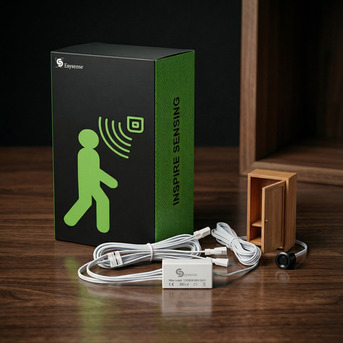
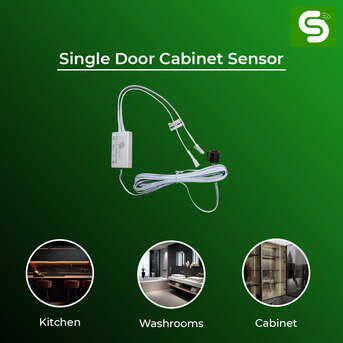
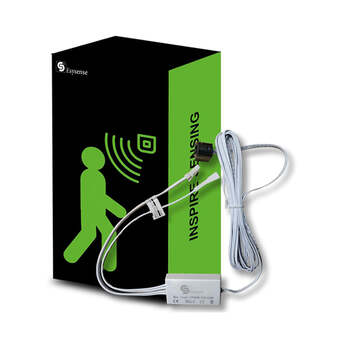
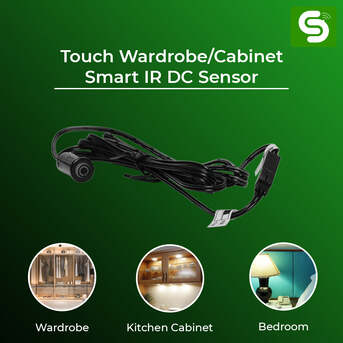
A wardrobe sensor is an intelligent infrared (IR) sensor that automatically switches LED lights ON when a wardrobe or cabinet door is opened and turns them OFF when it is closed. These compact sensors are designed for 12V–24V DC LED lighting systems, making them ideal for wardrobes, kitchen cabinets, drawers, display units and modular furniture.
Esysense offers single-door, double-door, and touch sensor wardrobe solutions, allowing homeowners to automate furniture lighting without using conventional switches.
Product Comparison:
1. Single Door Sensor (ESY-M22)
(i) Technology: IR Sensor
(ii) Operating Voltage: 12–24V DC
(iii) Detection Distance: 5–6 cm
(iv) Load Capacity: Up to 60W
(v) Smart Dimming: No
(vi) Best Application: Single Door Wardrobe
2. Double Door Sensor (ESY-M23)
(i) Technology: Dual IR Sensor
(ii) Operating Voltage: 12–24V DC
(iii) Detection Distance: 5–6 cm
(iv) Load Capacity: Up to 60W
(v) Smart Dimming: No
(vi) Best Application: Double Door Wardrobe
3. Touch Sensor (ESY-M40)
(i) Technology: IR Touch Sensor
(ii) Operating Voltage: 12–24V DC
(iii) Detection Distance: Up to 8 cm
(iv) Load Capacity: Up to 60W
(v) Smart Dimming: Yes
(vi) Best Application: Premium Cabinets
What is a Wardrobe Sensor?
A wardrobe sensor is a compact automation device installed inside wardrobes or cabinets to control LED lighting automatically. Unlike conventional wall switches, the sensor detects the position of the wardrobe door or hand movement and operates the light automatically.
When the wardrobe is opened:
(i) Sensor detects the opening
(ii)LED light switches ON instantly
(iii) Interior becomes clearly visible
When the wardrobe is closed:
(i) Sensor detects the closed position
(ii) Light switches OFF automatically
(iii) Power consumption stops
This simple automation improves convenience while reducing unnecessary energy usage.
Bottom Line:
Wardrobe sensors provide automatic lighting exactly when needed without requiring manual switching.
Types of Wardrobe Sensors:
Single Door Wardrobe Sensor (ESY-M22)
Designed specifically for wardrobes or cabinets with one door.
Key features include:
(i) 12–24V DC operation
(ii) 5–6 cm detection distance
(iii) Compact installation
(iv) Up to 60W load capacity
Suitable for:
(i) Bedroom wardrobes
(ii) Kitchen cabinets
(iii) Office storage units
(iv) Study tables
Double Door Wardrobe Sensor (ESY-M23)
Designed for wardrobes having two opening doors.
Features include:
(i) Dual infrared receivers
(ii) Automatic operation for both doors
(iii) 12–24V DC compatibility
(iv) Compact concealed installation
(v) Up to 60W LED load
Ideal for:
(i) Double-door wardrobes
(ii) Crockery units
(iii) Pantry cabinets
(iv) Display furniture
Touch Sensor with Smart Dimming (ESY-M40)
For users wanting premium furniture lighting.
Features include:
(i) Touch or hand gesture operation
(ii) Smart dimming
(iii) Up to 8 cm sensing distance
(iv) 12–24V DC support
(v) 60W load capacity
Perfect for:
(i) Luxury wardrobes
(ii) Vanity mirrors
(iii) Designer cabinets
(iv) Display shelves
Benefits of Installing a Wardrobe Sensor:
(i) Hands-Free Lighting: Lights activate automatically whenever the wardrobe is opened.
(ii) Better Energy Efficiency: Lighting remains ON only while the wardrobe is in use.
(iii) Cleaner Interior Design: No visible switches interrupt the furniture's appearance.
(iv) Longer LED Life: Automatic switching reduces unnecessary operating hours.
(v) Enhanced User Convenience: Finding clothes and accessories becomes easier, especially in low-light conditions.
Bottom Line:
Wardrobe sensors combine convenience, aesthetics and energy efficiency in one compact device.
Best Applications
Wardrobe sensors are suitable for:
1. Bedroom wardrobes
2. Walk-in wardrobes
3. Kitchen cabinets
4. Crockery units
5. Display cabinets
6. TV units
7. Office storage furniture
8. Bookshelves
9. Vanity mirrors
10. Drawer lighting
Their compact design allows discreet installation inside modern modular furniture.
Wardrobe Sensor vs Conventional Switch
1. Conventional Switch
(i) Manual Operation: Yes
(ii) Automatic Lighting: No
(iii) Hidden Installation: No
(iv) Furniture Integration: Basic
(v) Energy Saving: Moderate
(vi) User Experience: Standard
2. Wardrobe Sensor
(i) Manual Operation: No
(ii) Automatic Lighting: Yes
(iii) Hidden Installation: Yes
(iv) Furniture Integration: Excellent
(v) Energy Saving: High
(vi) User Experience: Smart
Bottom Line:
Wardrobe sensors offer a cleaner, smarter and more automated lighting solution than traditional switches.
Installation Tips
For reliable operation:
(i) Install the sensor near the wardrobe door.
(ii) Use compatible 12V–24V DC LED strips or cabinet lights.
(iii) Avoid placing the sensor behind thick metal components.
(iv) Route cables neatly inside the furniture.
(v) Test door movement before final installation.
Professional installation ensures the best performance and long-term reliability.
Frequently Asked Questions
Q: What is a wardrobe sensor?
A: A wardrobe sensor is an infrared sensor that automatically switches wardrobe or cabinet lights ON when the door opens and OFF when it closes.
Q: Can wardrobe sensors be used with LED strip lights?
A: Yes. Esysense wardrobe sensors are designed for 12–24V DC LED strip lighting systems.
Q: Which sensor is suitable for double-door wardrobes?
A: The ESY-M23 Double Door Cabinet Sensor is specifically designed for double-door wardrobes using dual IR receivers.
Q: Does Esysense offer a wardrobe sensor with dimming?
A: Yes. The ESY-M40 IR Touch Sensor includes a smart dimming function in addition to automatic touch-based operation.
People Also Ask
Q: Which is the best wardrobe sensor for modular furniture?
A: Infrared wardrobe sensors designed for 12–24V DC LED systems are ideal because they provide automatic, energy-efficient lighting inside furniture.
Q: Can wardrobe sensors work in kitchen cabinets?
A: Yes. The same sensors are commonly installed in kitchen cabinets, pantry units and storage cupboards.
Q: Are wardrobe sensors difficult to install?
A: No. Their compact size and low-voltage operation make them suitable for concealed installation in modern furniture.
Q: What is the difference between a single-door and double-door wardrobe sensor?
A: A single-door sensor controls one cabinet door, while a double-door sensor includes two infrared receivers for wardrobes with two opening doors.
Conclusion
A wardrobe sensor is one of the easiest ways to upgrade wardrobes and cabinets with smart, automatic lighting. Whether you're designing a modular bedroom, mo